Enterprise UX Transformation: InfoCenter AI Assistant Project at Konrad Group
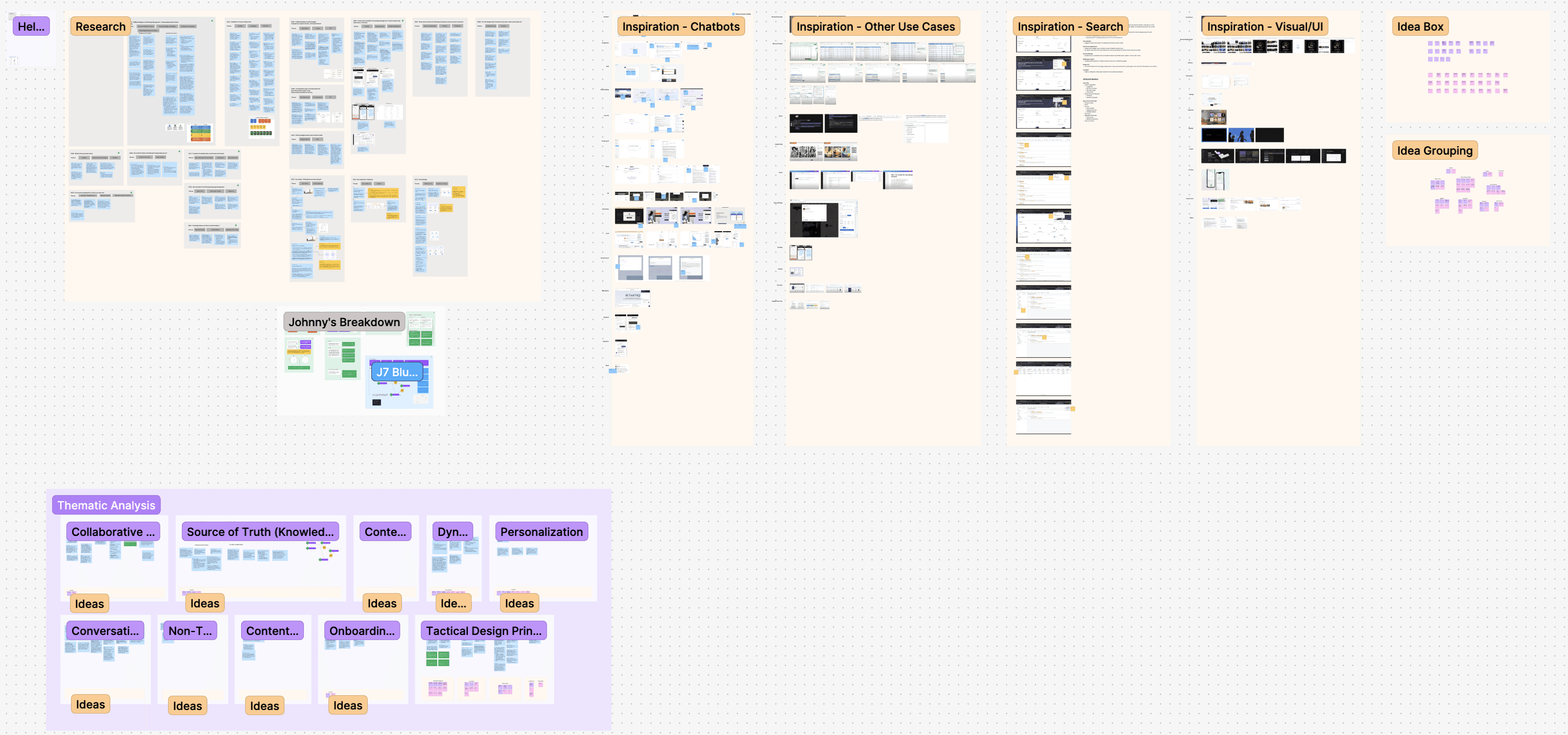
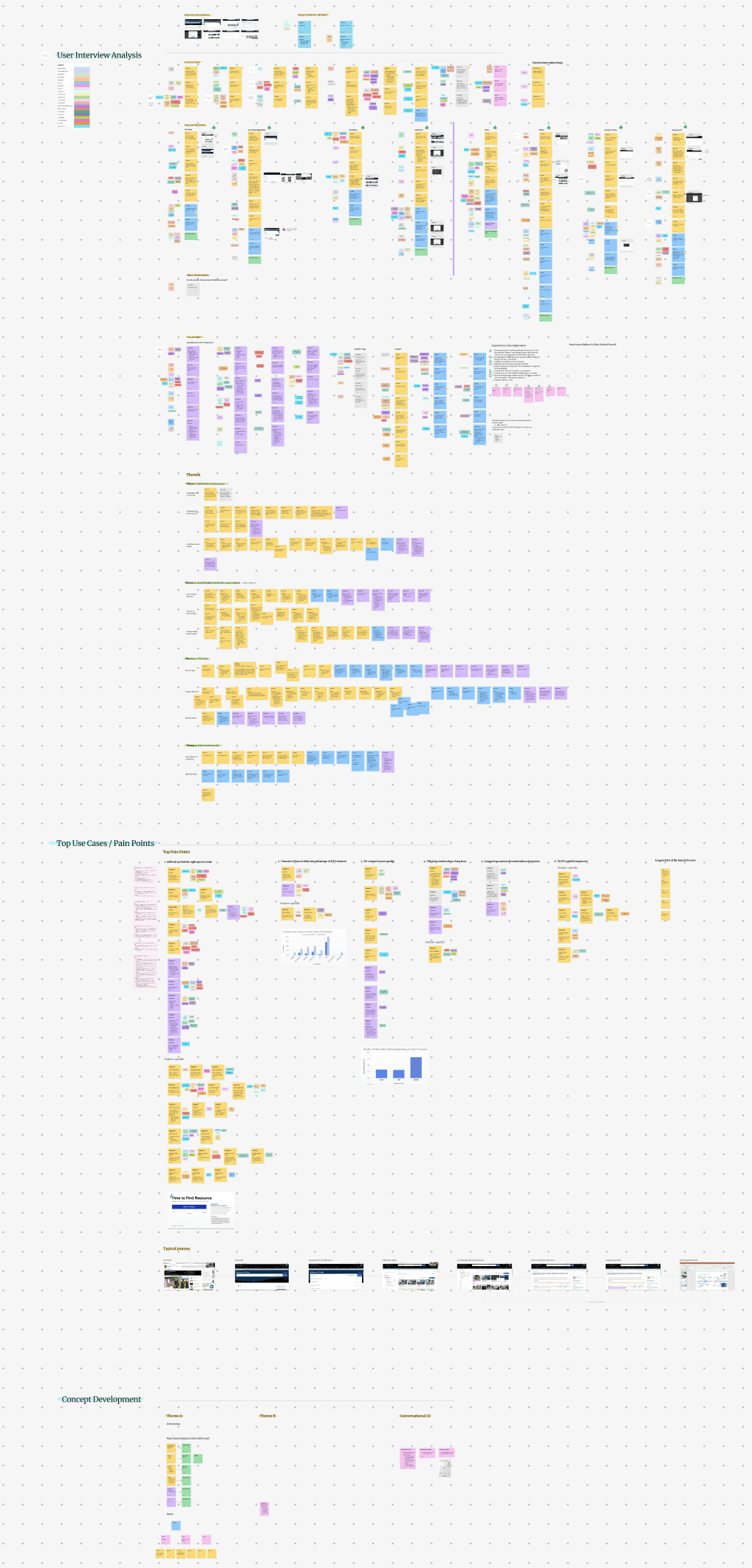
During my internship at Konrad Group, I spearheaded a transformative UX design initiative for a major global professional services firm's knowledge management system, known internally as KX. Working with a cross-functional team, I conducted comprehensive user research that identified critical pain points affecting hundreds of thousands of professionals across 150+ countries who relied on this system daily.
Our research uncovered several interconnected challenges that severely limited knowledge discovery and utilization:
Search relevance issues - Users struggled to find relevant content due to poor matching algorithms, resulting in irrelevant or overwhelming search results
Feature discoverability barriers - Complex functionality remained unused as users were unaware of powerful features that could enhance their workflows
Content quality concerns - Resources were often outdated, lacked context, or didn't meet the specific needs of different user segments
Inefficient filtering mechanisms - The existing system made refining search results cumbersome, forcing users to invest significant time finding relevant information
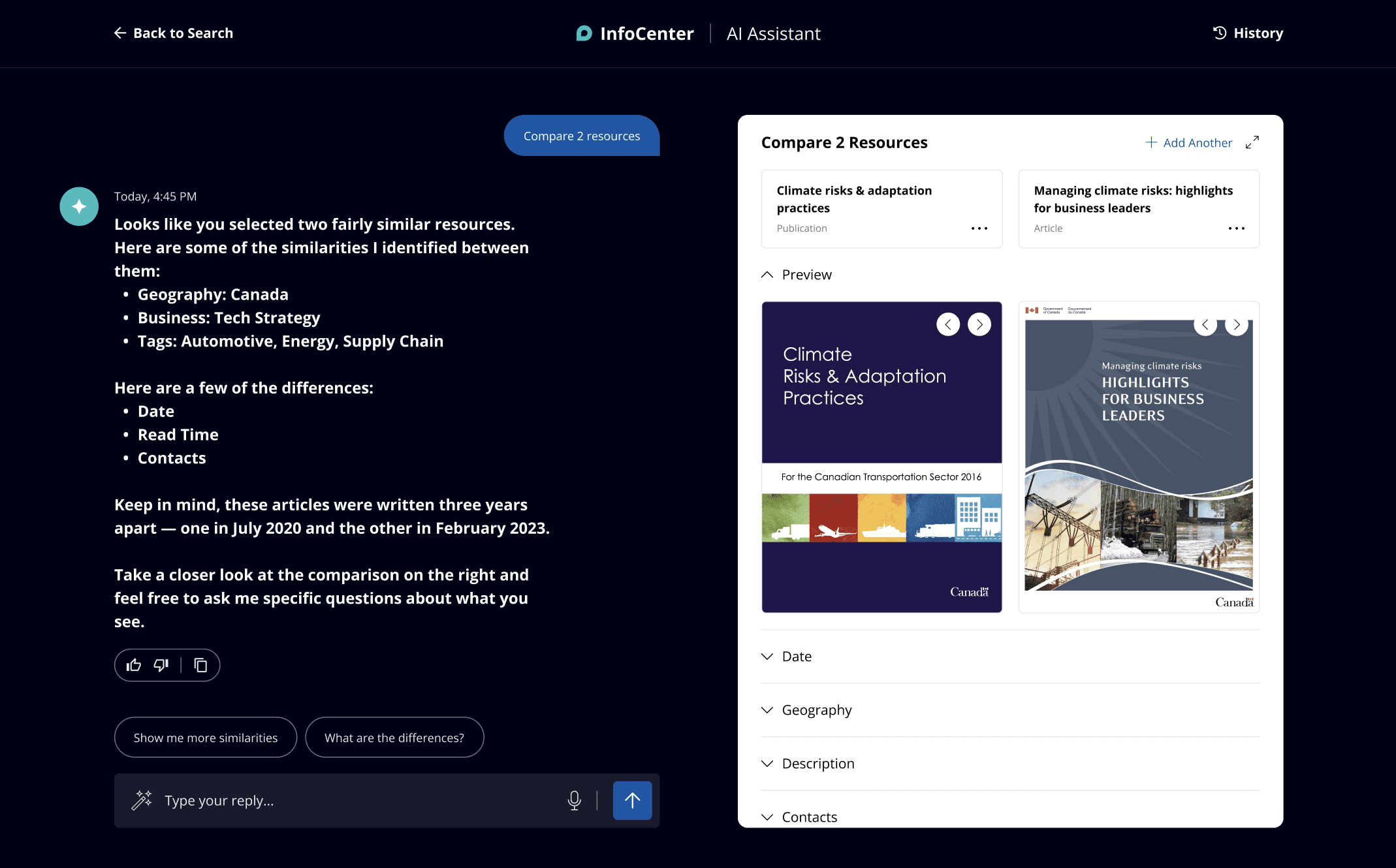
Comparison difficulties - Users needed to open multiple windows and manually compare resources, creating workflow friction
These challenges collectively resulted in significant productivity losses across the organization, with professionals resorting to workarounds or abandoning the system entirely in favor of personal networks or alternative knowledge sources.
Design Innovation: The InfoCenter AI Assistant
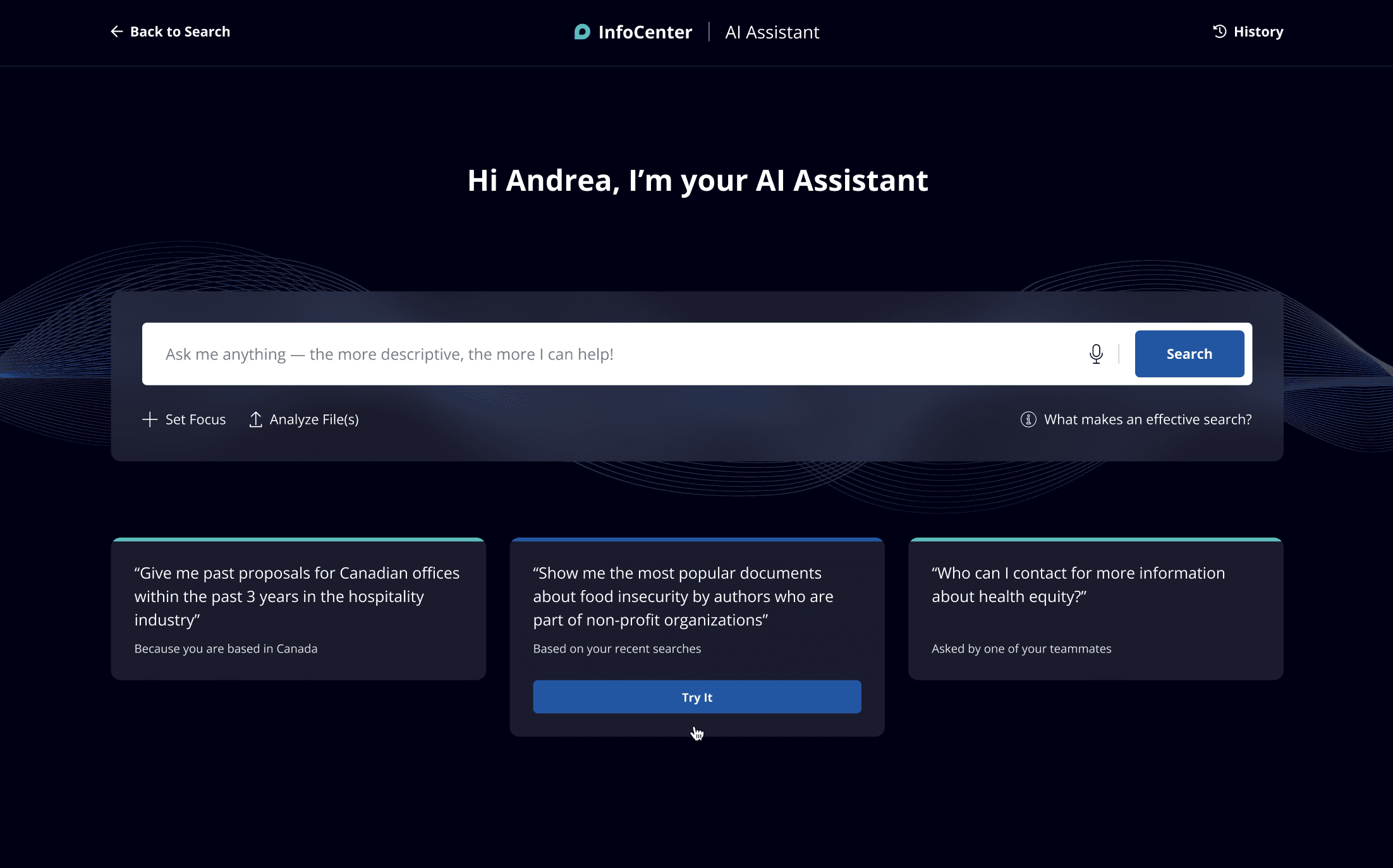
Based on our extensive user research, I designed a comprehensive AI-assisted search experience that fundamentally reimagined how professionals interact with organizational knowledge. Rather than simply applying cosmetic changes, our solution addressed the underlying information architecture and interaction patterns that were causing friction.
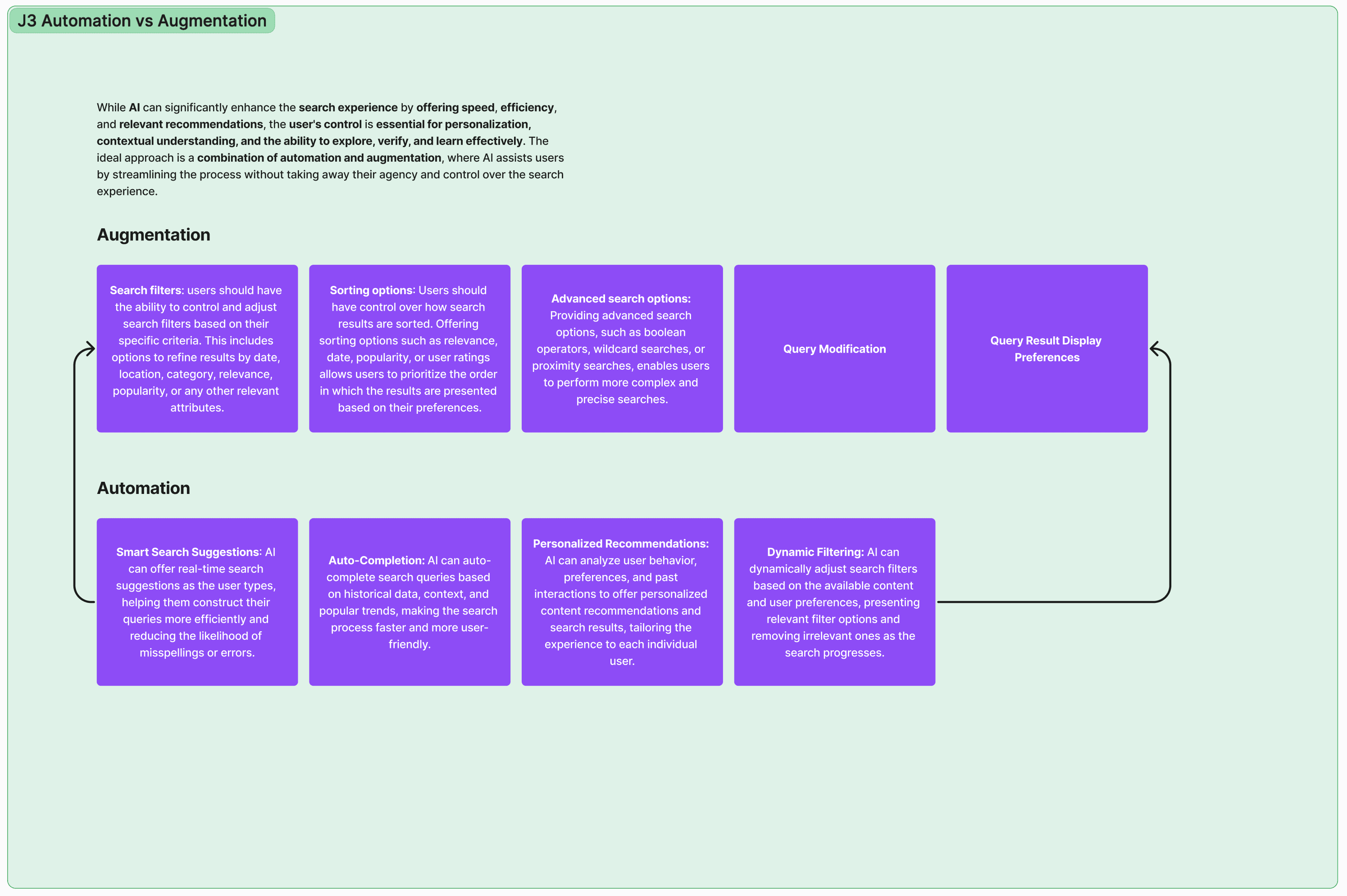
The core of our innovation was an intelligent assistant that balanced automation with augmentation – enhancing user capabilities without removing their agency in the search process. My design addressed this balance through several key components:
1. Dual-Model Chatbot Architecture
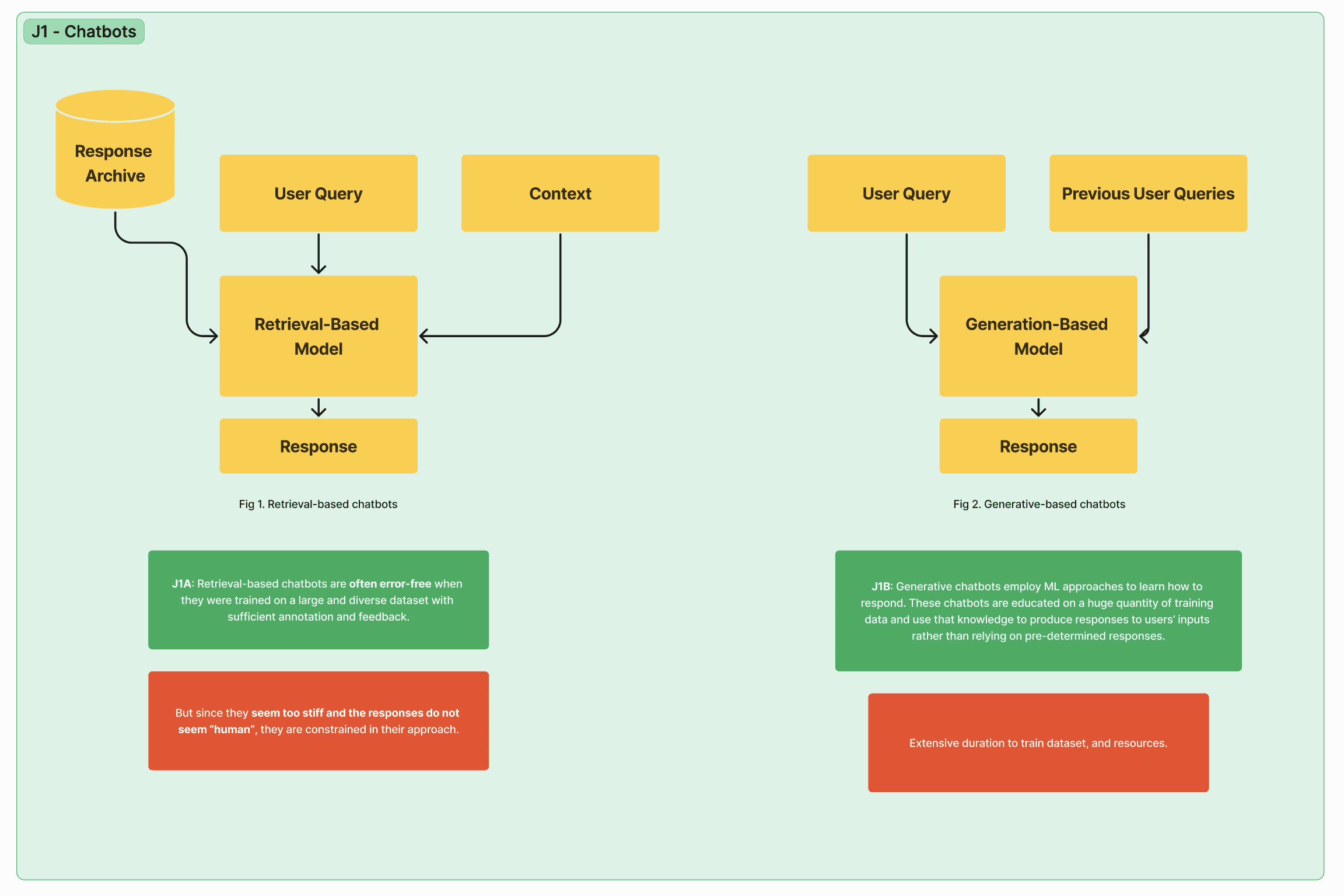
I designed a hybrid chatbot system that leveraged both retrieval-based and generative AI approaches:
Retrieval-based model - Pulling from a curated response archive to ensure accuracy and consistency for common queries
Generative model - Creating contextual, personalized responses for complex questions while maintaining natural conversation flow
This dual approach ensured both reliability and flexibility, addressing user concerns about AI accuracy while still providing the conversational experience they desired.
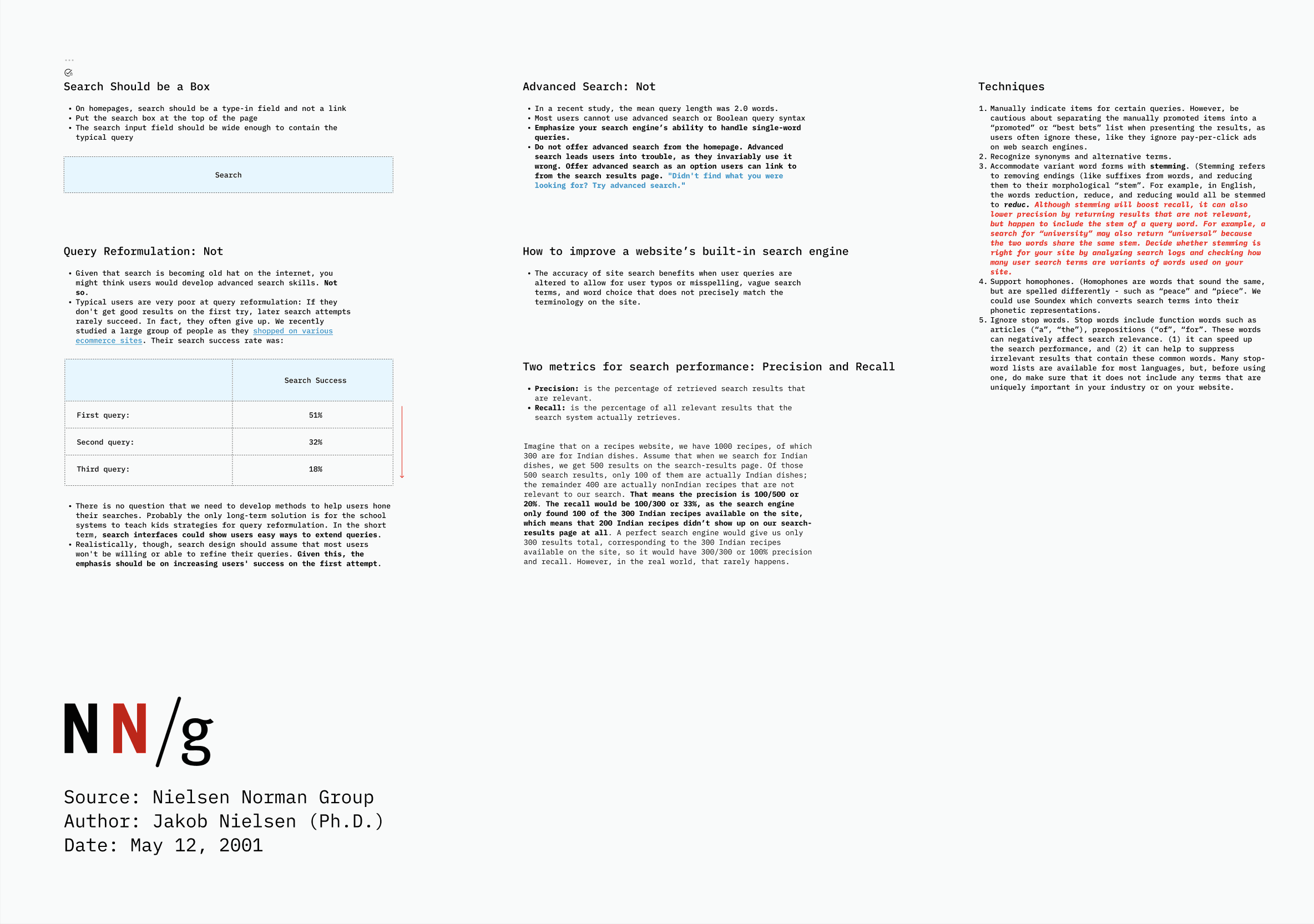
2. Precision & Recall Optimization
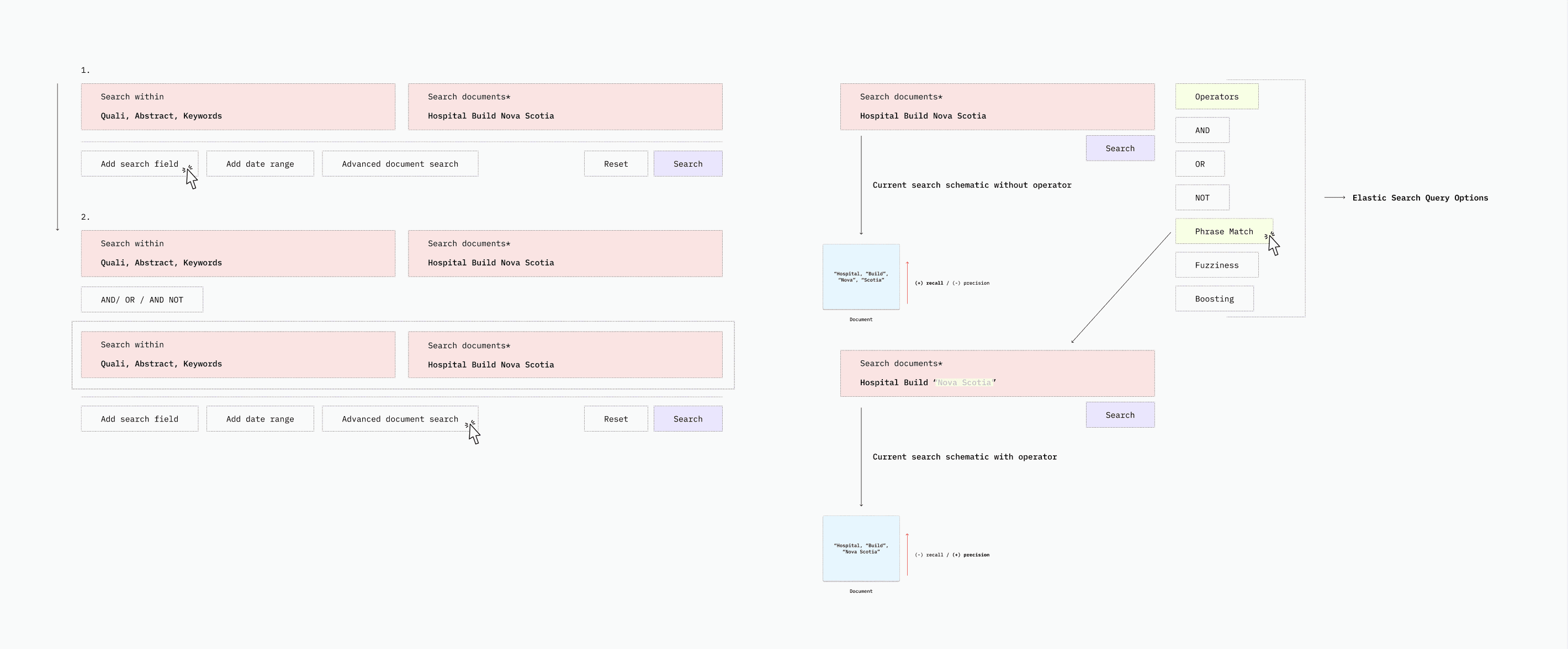
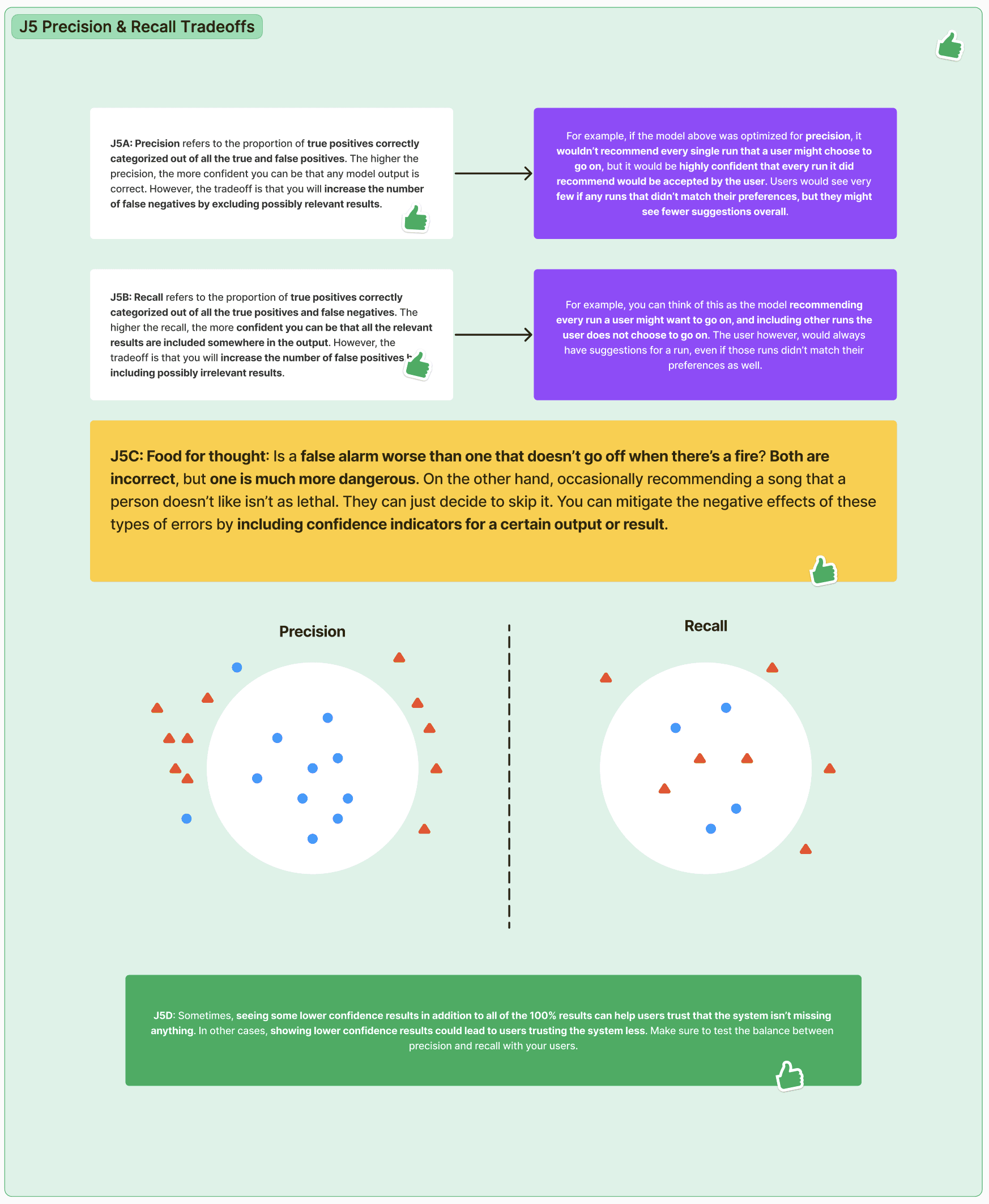
My design incorporated sophisticated relevance controls that allowed the system to balance precision (showing only highly relevant results) with recall (ensuring comprehensive coverage). This approach directly addressed the primary user frustration of either too many irrelevant results or missing critical information.
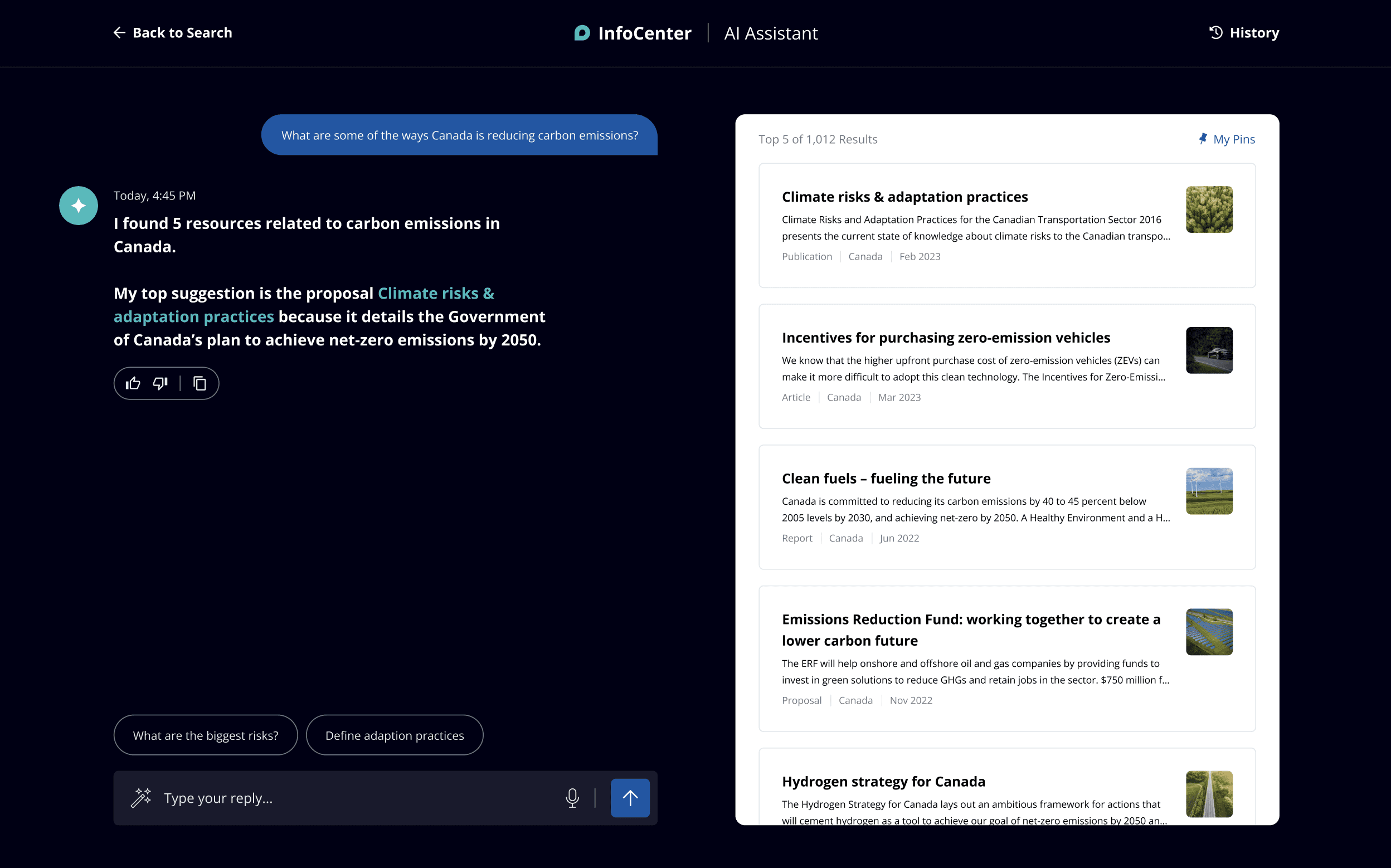
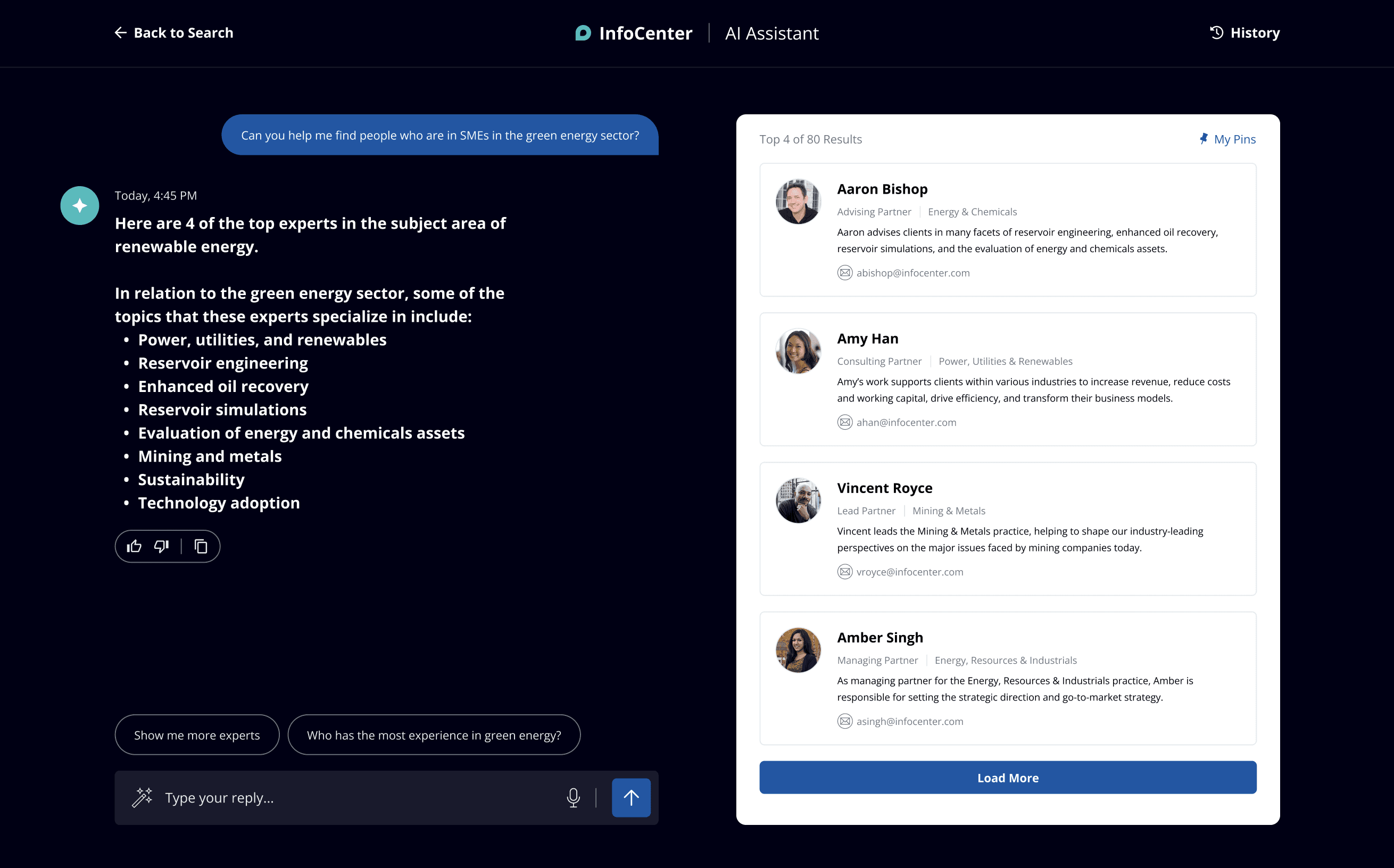
I included visual confidence indicators for search results, helping users understand why certain resources were presented and building appropriate trust in the system's recommendations.
3. User-Centric Search Controls
Rather than forcing users into rigid search patterns, I designed an interface that empowered them with granular control over their information discovery:
Advanced filtering - Context-aware filters that dynamically adjusted based on content categories and user history
Customizable sorting - Multiple organization options including relevance, date, popularity, and personalized recommendations
Comparison tools - Side-by-side resource evaluation without requiring multiple windows or downloads
Query modification - Intelligent suggestions for refining searches based on available content
Educational Design Artifacts
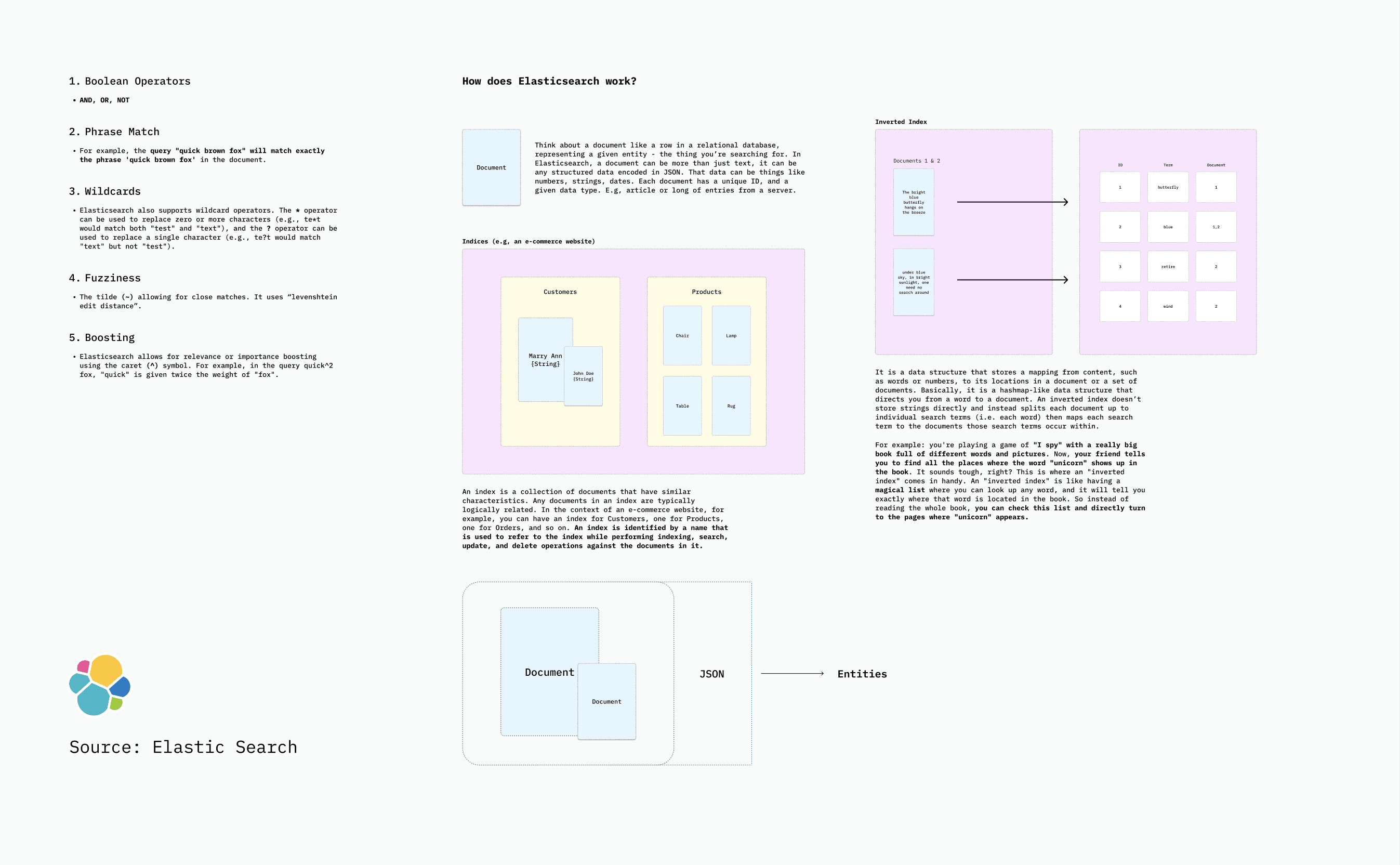
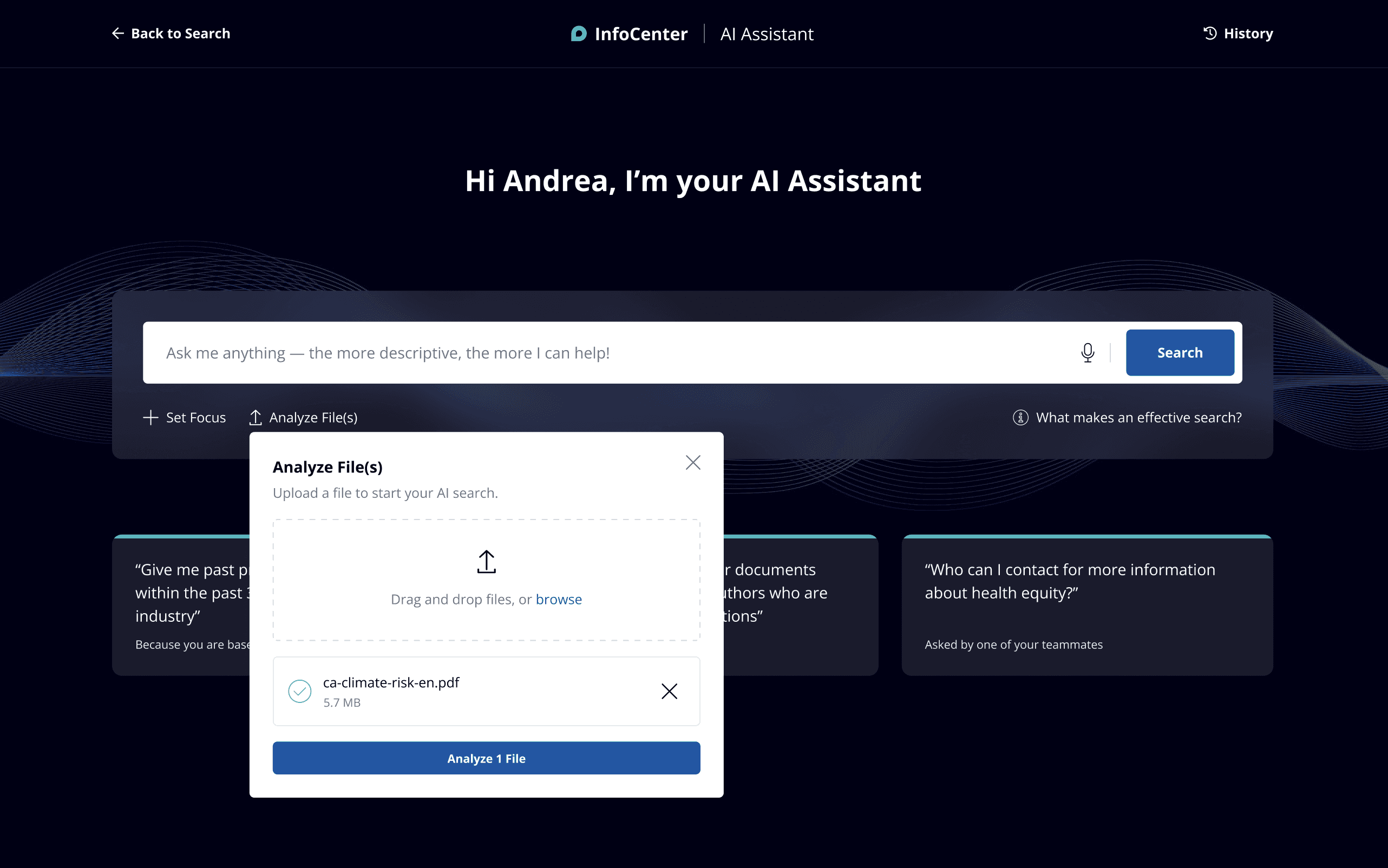
As part of my comprehensive approach, I created a series of educational design artifacts that documented key AI and UX principles relevant to the project. These artifacts served both as alignment tools for stakeholders and as educational resources for the broader design team:
Chatbot Architecture Comparison (J1) - Illustrating the tradeoffs between retrieval and generative approaches
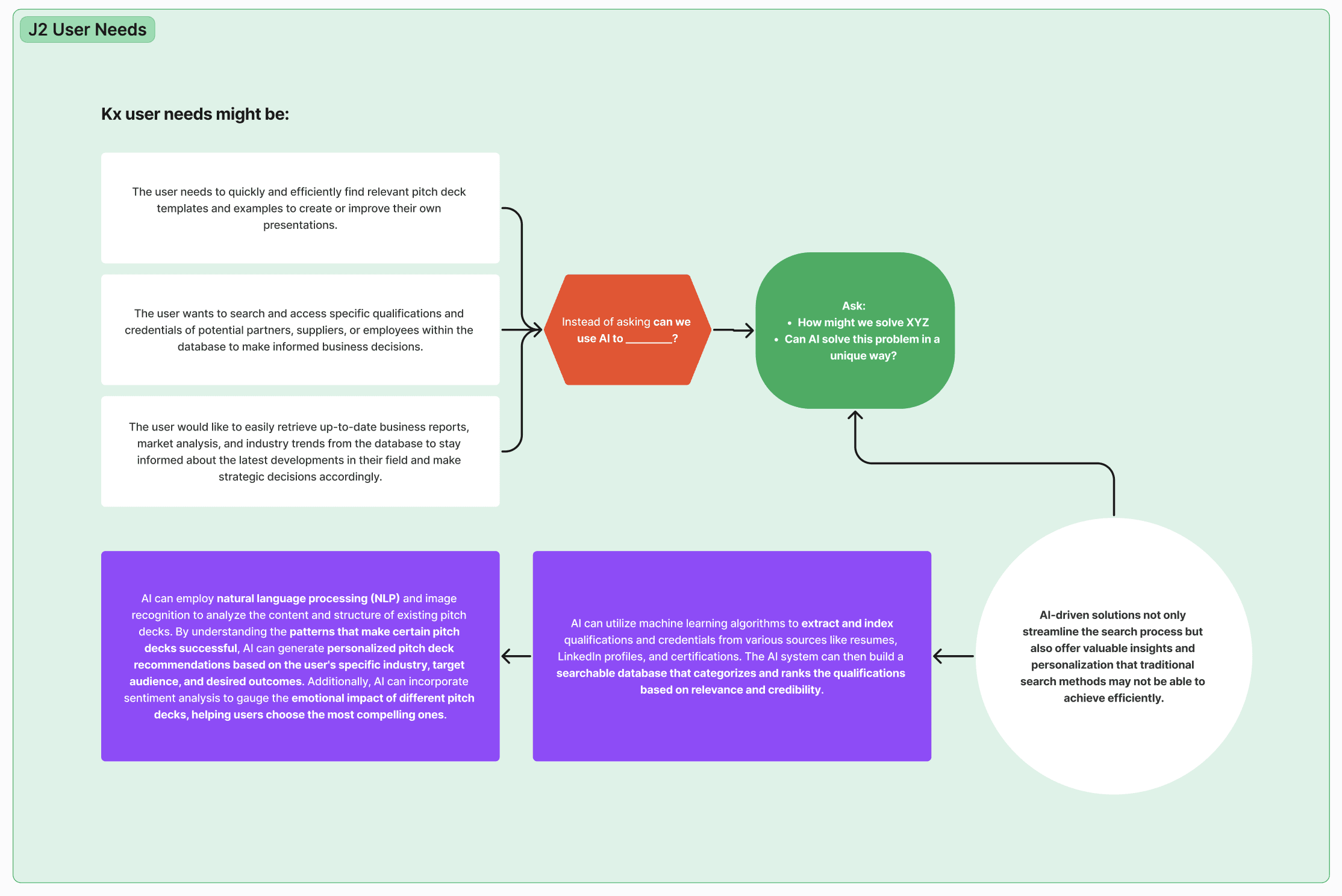
User Needs Framework (J2) - Mapping knowledge worker requirements to AI capabilities
Automation vs. Augmentation (J3) - Clarifying when to enhance versus replace human decision-making
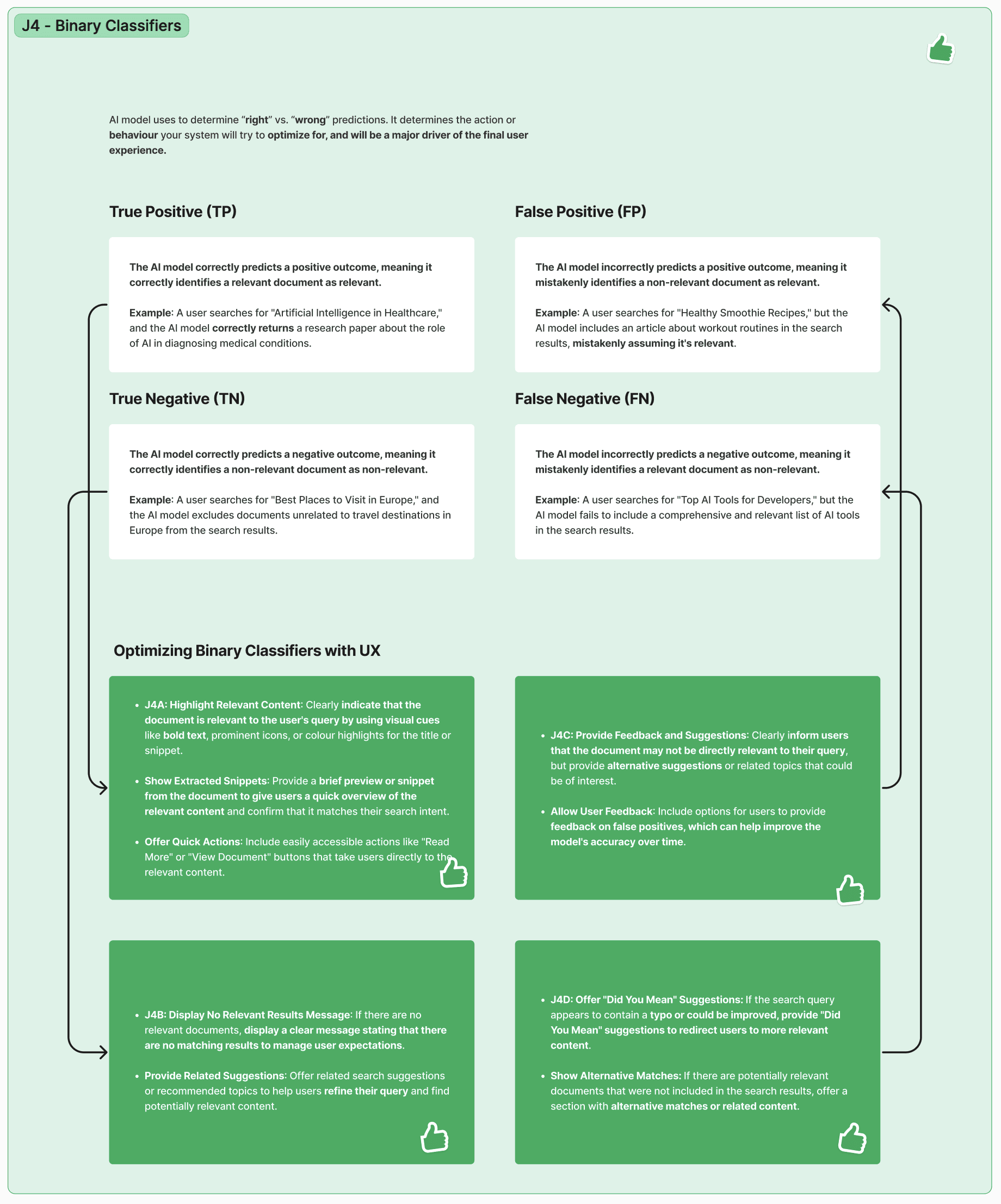
Binary Classifiers in Search (J4) - Explaining how relevance judgments impact user experience
Precision & Recall Tradeoffs (J5) - Visualizing the balance between comprehensive and focused results
These artifacts helped bridge communication gaps between technical, design, and business stakeholders, ensuring all parties understood the rationale behind our design decisions.
Professional Growth and Impact
This project represented a significant professional milestone, allowing me to apply design thinking to complex enterprise information systems while navigating the technical intricacies of AI implementation. The experience enhanced my capabilities in:
Conducting rigorous user research in enterprise environments
Translating technical AI concepts into human-centered designs
Balancing competing stakeholder priorities across global organizations
Creating educational materials that build understanding across disciplines
Designing systems that enhance rather than replace human expertise
While confidentiality agreements prevent sharing the specific implementations developed for this client, the conceptual frameworks and design principles I created continue to inform my approach to complex information systems and AI-assisted user experiences.
More Artifacts